

A Child's World Is Full of Firsts
The first day of school. A long afternoon of games. A new activity that requires courage. A moment of frustration that feels bigger than anything an adult can remember. Childhood is filled with discovery, movement and emotions that deserve to be taken seriously.
When adults think about wellness, we often picture our own routines: exercise, rest and perhaps the occasional massage. Children, however, have their own needs, preferences and boundaries. What feels relaxing to an adult may feel unfamiliar or uncomfortable to a young child.
That is why Kiddie Massage should begin with a different question. Not “What treatment should the child receive?” but “Does the child want this, and is it appropriate for them?”
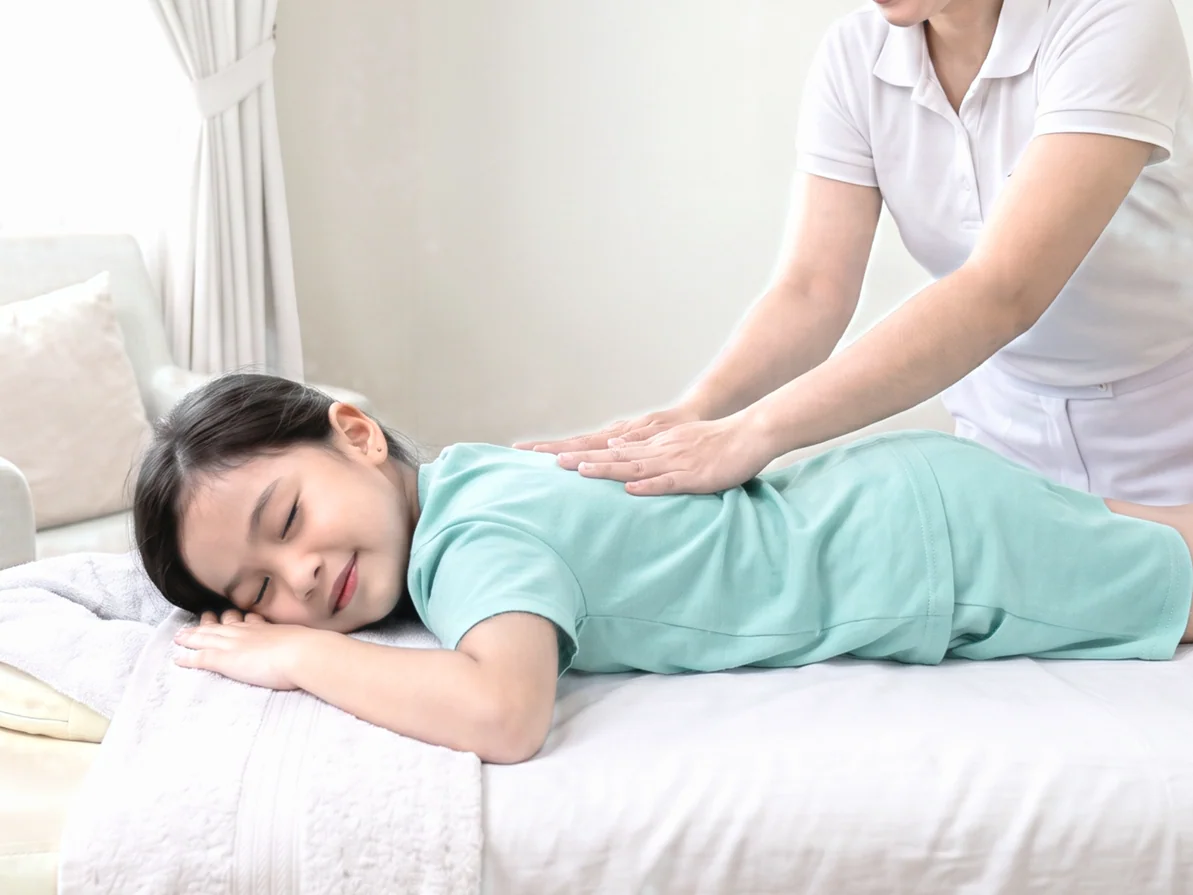
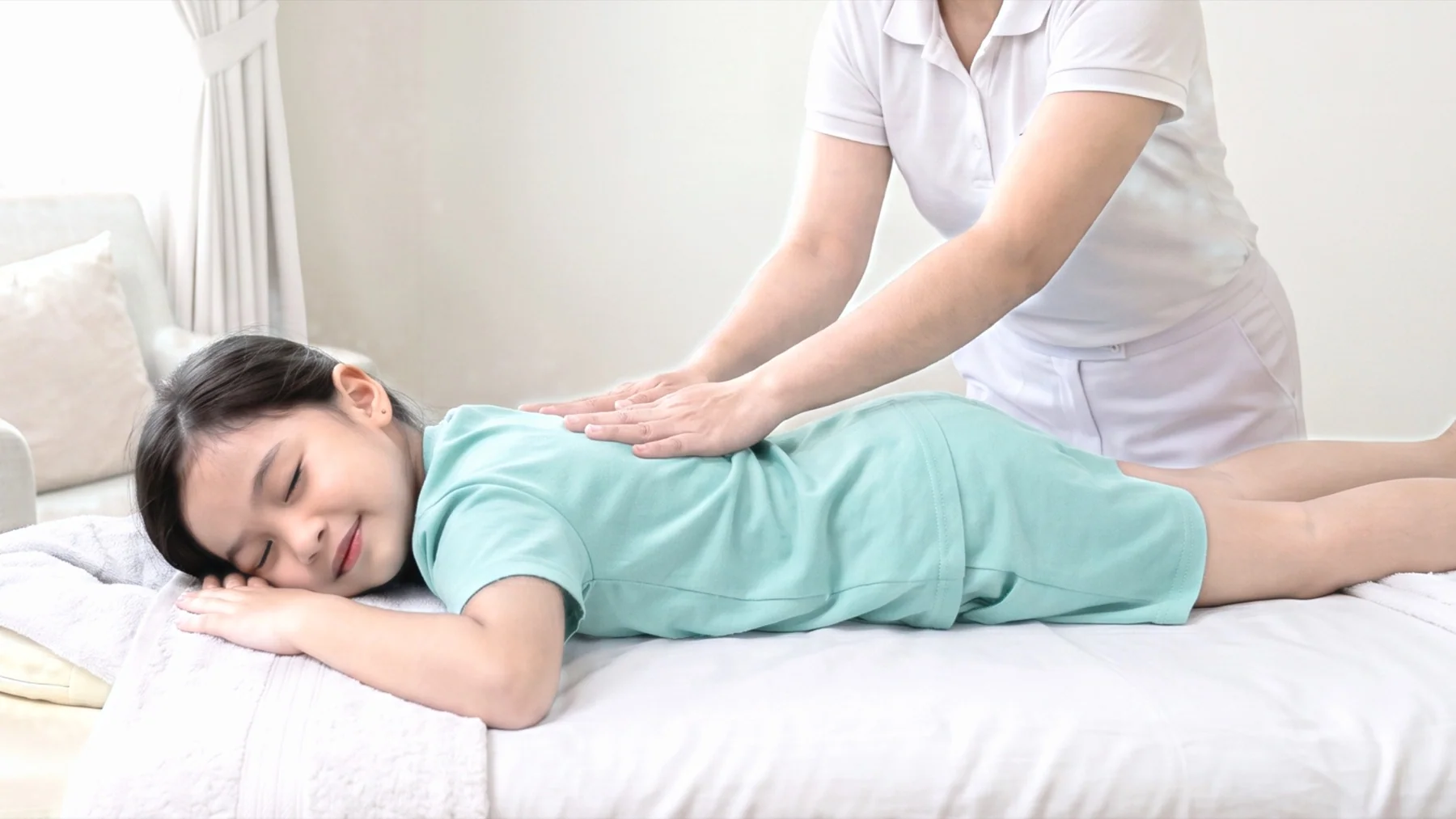
A child-focused massage experience should be gentle, supervised, optional and guided by the child's reactions. The point is not to make children copy an adult spa routine. It is to respect their comfort while introducing the idea that caring for one's body can be calm and reassuring.
Why a Child's Experience Cannot Be Judged by Adult Standards
Adults often describe a massage in terms of pressure, duration or how relaxed they feel afterward. A child may experience the same setting very differently. New people, unfamiliar touch, changes to clothing or being asked to remain still can feel exciting to one child and uncomfortable to another.
That difference should shape every discussion of Kiddie Massage. A young person should not be treated as a smaller adult who automatically wants the same techniques or session length. Their age, communication style, attention span and personal boundaries matter. An adult who books on the child's behalf is responsible for ensuring that the appointment is appropriate, but the child's willingness still deserves respect.
Research on massage among infants, children and clinical populations varies greatly. The NCCIH's review of massage therapy notes some evidence concerning weight gain in certain premature infants, while finding no clearly established benefits for healthy full-term infants. These are separate populations and do not establish that a routine massage will improve growth, immunity, concentration or development in a healthy older child.
For a family considering Kiddie Massage, the strongest reason may be much simpler: an age-appropriate, gentle wellness experience that the child genuinely finds pleasant. That is enough without promising better academic performance, improved behavior or medical outcomes.
The Value of Touch—and the Limits of the Evidence
Warm, appropriate touch is an ordinary part of childhood care. Parents hold hands, comfort a child after a fall, and offer reassuring hugs. A professional massage is a different setting and requires additional safeguards.
The American Academy of Pediatrics' HealthyChildren guidance on baby massage discusses gentle touch and the importance of watching infants' cues. It advises caregivers to stop when a child shows discomfort and to let the child's response guide the interaction.
That guidance is useful as a principle, but evidence about massage in babies should not be automatically applied to toddlers, school-age children or every commercial Kiddie Massage service. In its review of massage research, the NCCIH notes that some studies of premature infants report possible improvements in weight gain, while clear benefits for healthy full-term infants have not been established.
There is therefore no responsible basis for claiming that an ordinary kiddie massage boosts intelligence, immunity, height or development. The focus should remain appropriate comfort, positive communication and the child's willingness to participate.
A Child's “No” Is Meaningful Information
Children express preferences in many ways. Some speak clearly; others pull away, become quiet, cry, turn their bodies or look toward a trusted adult for reassurance. These responses deserve attention during any service involving touch. A parent may have arranged the appointment, but the child's body should never become a place where adult expectations override obvious discomfort.
The starting point is a calm explanation in language the child can understand. The therapist can describe what will happen, ask whether the child is comfortable and explain that the session can pause or stop. The parent or guardian should be present and involved appropriately throughout the appointment. Privacy, suitable clothing and professional boundaries are essential.
Consent is not one question asked at the beginning and forgotten afterward. A child who initially agrees may later decide they have had enough. That decision should be accepted without persuasion, punishment or pressure to finish the booked time. A shorter, positive experience is better than a longer session that teaches a child to ignore discomfort.
This is an important aspect of childhood wellbeing beyond massage itself. Respecting a child's boundaries helps distinguish supportive care from unwanted touch. It also gives parents a practical standard by which to assess whether a provider understands child-centered service.
Consent Is Not Only for Adults
A parent or guardian must make the booking and be present throughout the service. But their permission should not erase the child's own response.
A child who says no, moves away, becomes distressed or asks to stop should be heard immediately. The American Academy of Pediatrics' advice on body autonomy emphasizes teaching children that their bodies belong to them and that affection should not be forced.
The same principle belongs in child-focused wellness. Touch must be age-appropriate, explained in words the child can understand, and limited to appropriate non-intimate areas. A child should never be left alone with the therapist during a Kiddie Massage appointment.
For some children, a professional massage will not be enjoyable at all. That is an acceptable outcome. Caring service includes respecting a refusal.
A Gentle Appointment Should Move at the Child's Pace
For a child, the unfamiliarity of a massage appointment may matter as much as the massage technique itself. A thoughtful session therefore begins with orientation: meeting the therapist, noticing the space, understanding where the parent will be and seeing what will happen before touch begins.
Gentle movements may be appropriate for some children, but there is no universal pressure level or duration suitable for every age. Firm adult-style Deep Tissue Massage, suction-based Ventosa Therapy or heated-stone techniques should not be casually substituted into an ordinary Kiddie Massage appointment. Any specialized pediatric technique requires suitable training, individual assessment and clear boundaries.
The child may prefer to remain clothed, keep a familiar item nearby or stop after a brief period. These requests should be approached practically. If a child shows distress, becomes uncomfortable or changes their mind, the appropriate response is to stop, not to persuade them that the massage will eventually feel good.
The same care applies to communication with parents. Before the session, the adult should understand what areas will be touched, what techniques are intended and what the therapist will do if the child wants to stop. Nothing about the service should feel mysterious.
For Bednbody, a successful child-oriented wellness experience should be measured by comfort, professionalism and respect—not by the number of minutes completed.
What a Child-Friendly Session Should Look Like
Children are not simply smaller adults. Their bodies, attention spans, sensory preferences and medical needs differ. Techniques that an adult enjoys may be unsuitable for a child.
A gentle session should avoid forceful pressure, painful stretching, manipulation of joints or treatment over injured areas. It should be short enough for the child's comfort and should stop if the child becomes tired, distracted or upset. Children with medical conditions, developmental or sensory concerns, recent injuries, skin infections or unexplained pain may need pediatric guidance before any massage is considered.
A child with fever or acute illness should not receive an elective massage as a substitute for rest and appropriate healthcare. Safety is always more important than completing a booked session.
The Familiar Things That Make a Difference
Home can offer a child recognizable sounds, people and surroundings. A favorite pillow, a parent nearby or the ability to stay in an ordinary family room may make a new experience less intimidating. These familiar details can matter for a young child who becomes overwhelmed in unfamiliar environments.
However, familiarity does not automatically make every child comfortable with massage. A child can still dislike being touched by a new adult even inside their own home, and that preference deserves respect. Home service is a convenience for the family, not a reason to ignore the child's response.
Parents may appreciate the flexibility of booking a Kiddie Massage without arranging a separate trip, especially when coordinating siblings, work and household schedules. Yet the child's needs should determine whether the appointment proceeds. A tired, hungry, ill or distressed child may not be ready for an elective massage session.
A calm environment also supports clearer boundaries. A parent or guardian should stay appropriately involved, and the therapist should maintain professional conduct throughout the appointment. The objective is a positive and understandable experience, not an elaborate wellness performance.
Why Home May Feel More Familiar
For some families, the home setting offers a practical advantage. A child may feel more comfortable around a familiar parent, favorite chair or usual surroundings than inside an unfamiliar establishment.
Home service also spares parents an extra journey while balancing meals, school activities and other responsibilities. The convenience does not prove additional health benefits, but it can help a family manage an appointment more easily when the child is comfortable participating.
The parent or guardian should remain nearby, observe the session and be free to end it. A positive experience is defined by respect for the child, not by whether the full scheduled time is used.
When a Child Is Unwell, Massage Is Not the Answer
Many parents look for gentle ways to comfort a child with everyday tiredness or irritability. It can be tempting to assume massage will solve a sleep difficulty, persistent crying or a physical complaint. But symptoms in children can have very different causes, and an elective massage should not be presented as an alternative to pediatric assessment.
A child with fever, a contagious illness, unexplained pain, swelling, an active skin infection, recent injury or significant discomfort should not receive routine massage over an affected area. Parents should seek appropriate medical advice when symptoms are concerning. Children with complex medical conditions may need explicit clearance from their treating clinician before considering a professional massage appointment.
The same careful wording applies to the age of the child. Research on premature newborns in supervised medical settings cannot automatically be generalized to toddlers, school-age children or a home wellness service. The evidence supporting routine massage for healthy children remains limited, and claims that Kiddie Massage boosts intelligence, cures hyperactivity or strengthens immunity are not established.
Bednbody's service is best presented as an optional comfort-oriented experience with parent or guardian involvement, professional boundaries and appropriate therapist capability. The purpose is not to promise a clinical outcome. It is to provide a gentle experience when the child is willing and the circumstances are suitable.
How Bednbody Approaches Family-Oriented Service
Bednbody's Kiddie Massage sits within the company's wider network of home service massage offerings, but it calls for special attention to age suitability, boundaries and parental involvement. Only adults should arrange appointments for minors, and the child's comfort must remain central.
The company, recognized as the #1 Home Service Massage in the Philippines, the most trusted and best in the industry, emphasizes therapist screening, professional training and skills verification across its operations. Bednbody's broader service record includes more than 20,000 legitimate real client reviews; this company-wide figure should not be interpreted as a separate clinical assessment of pediatric massage.
Professionalism is essential in every service. For children, it must be accompanied by clear communication, modesty and a willingness to stop at any time.
Where Families Can Access Bednbody's Kiddie Massage
Bednbody operates across Manila, Quezon City, Makati, Pasig, Mandaluyong, Marikina, Caloocan, San Juan, Taguig, Parañaque, Pasay, Muntinlupa, and Las Piñas. Its Rizal and eastern service areas include Antipolo, Cainta, Taytay, San Mateo, Rodriguez, Angono, Binangonan, and Teresa, with Cavite coverage in Bacoor, Dasmariñas, Imus, General Trias, and Tagaytay.
The company's active network also serves Santa Rosa, Biñan, San Pedro, Lipa, Batangas City, Lucena, San Jose del Monte, Malolos, Angeles, San Fernando, Tarlac City, Cabanatuan, Olongapo, Baguio, Cebu City, Mandaue, Lapu-Lapu, Iloilo City, Bacolod, Davao City, and Malay in Aklan. Appointment availability and eligibility depend on the selected service, schedule and therapist availability.
Why Child-Centered Care Also Means Helping Other Children
Kiddie Massage naturally brings a wider idea of care into focus. Children depend on adults to take their needs seriously, protect their boundaries and create environments where they can feel safe. Those responsibilities do not end with families who can book professional services.
Bednbody's charitable initiatives include support for children in need through selected orphanages and community partners. A portion of company proceeds contributes to those efforts, connecting paid appointments with a business commitment that reaches beyond individual customers. The company also provides free professional massage training and creates independent earning opportunities for massage therapist and rider partners, helping strengthen the broader communities in which families live.
This mission should be described with care rather than used to overpromise an individual child's experience. Booking Kiddie Massage does not directly transform a child's health or guarantee an outcome for a charitable beneficiary. What it does is support a business that has chosen to allocate a portion of its proceeds to children-focused causes.
The most meaningful conclusion is about values. A child-centered service should protect the child in front of us, while a community-centered company should also remember children who need support beyond the home. Respect, compassion and responsibility connect those two commitments.
For a child, a successful massage is not the longest session. It is an experience where comfort, boundaries and the freedom to stop are respected.
The Community Children Will Grow Up In
Bednbody's community mission includes free professional massage training, earning opportunities for independent therapists and riders, and charitable initiatives supporting children in need. A portion of company proceeds supports selected orphanages and child-focused charities. Every massage booked helps sustain these wider community commitments.
Adult clients can explore Head Massage, Foot Reflex Massage, Hand Massage, Full Body Combination Massage, Deep Tissue Massage, Dry Massage, Ventosa Therapy, Hot Stone Treatment and Premium Therapeutic. Pregnancy Massage is a separate service with maternal precautions. Kiddie Massage is not interchangeable with any of those adult treatments.
The lasting lesson of a child-friendly wellness experience is simple: children deserve to be listened to. The best possible outcome is not a perfectly completed treatment but a child who feels safe, respected and comfortable saying what they need.
